

 Thermal labels



High-Quality BPA Free Thermal Labels - Trusted Suppliers & Products
Product Overview
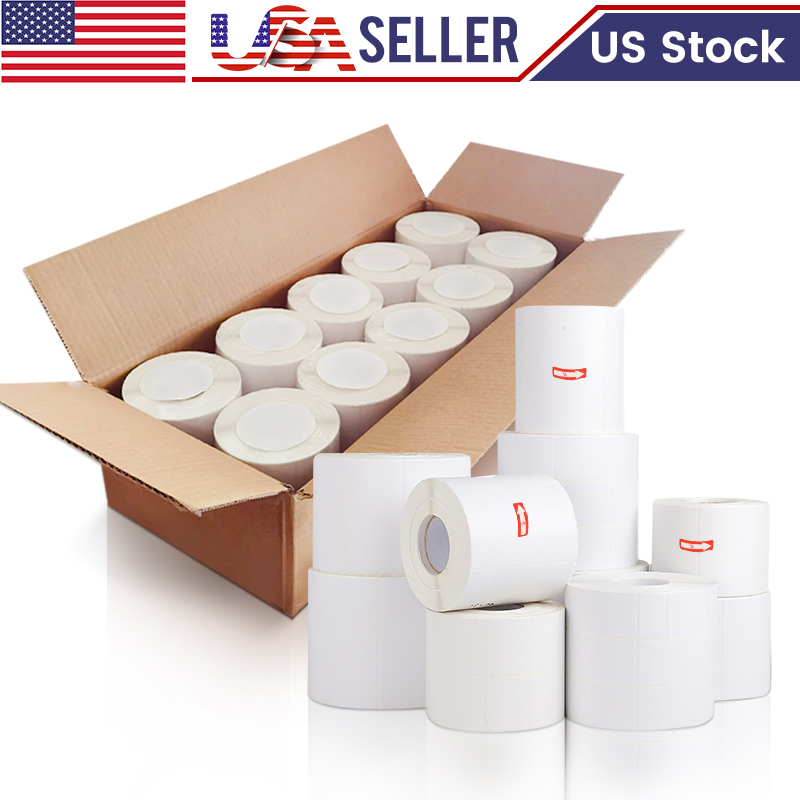
BPA free thermal labels are self-adhesive direct thermal labels used for short-term and medium-term identification. They are made with thermal-sensitive material that changes color under heat from the thermal printhead. Because the image is created directly on the label surface, the printing process does not require ink, toner or ribbon.
These labels are commonly used in shipping, retail, supermarkets, pharmacies, food packaging, warehouses, laboratories, offices and manufacturing facilities. They help businesses print barcodes, QR codes, product names, batch numbers, price information, expiry dates, address information and tracking codes.
Sailingpaper provides BPA free thermal label solutions for global B2B buyers, including 4x6 shipping labels, 100mm x 150mm thermal labels, barcode label rolls, scale labels, warehouse labels, retail labels, food labels, fanfold labels, colored thermal labels and customized OEM thermal labels.
What Does “BPA Free” Mean for Thermal Labels?
BPA is a chemical that has historically been used in some thermal paper coatings as a color developer. In thermal labels, the coating reacts with heat to form printed text or images. When a thermal label is described as BPA free, it means the product is designed without BPA in the thermal coating.
For business buyers, this matters because thermal labels are often touched by warehouse workers, cashiers, couriers, food handlers, pharmacy staff and end users. In markets where buyers pay attention to chemical safety or regulatory requirements, BPA free thermal labels can be a better choice for product positioning and customer trust.
However, BPA free does not automatically mean BPS free or phenol free. If customers need stricter material requirements, they should clearly request BPA-free, BPS-free or phenol-free options and confirm with testing documents before bulk purchase.
BPA Free vs BPS Free vs Phenol Free
Many buyers search for BPA free thermal labels, but different markets may use different safety terms. Understanding these terms helps avoid misunderstanding during purchasing.
1.BPA Free Thermal Labels
Thermal labels made without BPA in the thermal coating. This is suitable for buyers who want to reduce BPA-related concerns.
2.BPS Free Thermal Labels
Thermal labels made without BPS. Some BPA-free thermal materials may use other developers, so BPS-free should be confirmed separately if required.
3.Phenol Free Thermal Labels
A higher-level material option that avoids common phenolic developers such as BPA and BPS. This is often requested by buyers targeting stricter environmental or safety-sensitive markets.
4.Eco-Friendly Thermal Labels
This term may refer to BPA-free, BPS-free, phenol-free, linerless, recyclable packaging or reduced-waste designs. The exact meaning should always be clarified.
For professional B2B purchasing, the best practice is to define the required chemical standard before production and confirm whether testing reports are needed for the target market.
Main Product Types
Sailingpaper can provide different types of BPA free thermal labels according to application, printer type and market demand.
1.4x6 BPA Free Shipping Labels
Commonly used for e-commerce, courier, warehouse and parcel delivery. Suitable for printing shipping addresses, barcodes and tracking information.
2.100mm x 150mm Thermal Labels
A popular A6 size for logistics labels, shipping labels and online order fulfillment.
3.Barcode Thermal Labels
Used for inventory tracking, product identification, warehouse management, asset labels and retail systems.
4.Fanfold Thermal Labels
Flat-stacked labels suitable for external printer feeding, high-volume e-commerce printing and warehouse packing stations.
5.Thermal Label Rolls
Suitable for continuous printing with desktop or industrial thermal printers.
6.Retail Price Labels
Used in supermarkets, convenience stores, pharmacies and retail shelves.
7.Food Packaging Thermal Labels
Used for date labels, ingredient labels, batch labels and product identification in food packaging environments.
8.Medical and Laboratory Labels
Used for sample identification, pharmacy labels, patient-related information and laboratory tracking.
9.Custom BPA Free Thermal Labels
Custom size, adhesive, color, shape, core, packaging and pre-printed design are available for distributors and brand owners.
Product Structure
A BPA free thermal label is not just a simple sticker. Its performance depends on the combination of multiple layers.
1.Thermal Coating
The heat-sensitive layer creates the printed image. In BPA free thermal labels, this layer is made without BPA.
2.Facestock
The label face material affects smoothness, stiffness, print density and barcode clarity.
3.Adhesive Layer
The adhesive determines whether the label can stick firmly to cartons, plastic bags, food packaging, glass, metal or other surfaces.
4.Release Liner
The liner supports the label during printing, storage and peeling. A stable liner helps reduce label lifting and printer feeding problems.
5.Top Coating
Some labels can include a protective top coating to improve resistance to moisture, oil, scratches and handling.
6.Back Mark or Gap Design
Depending on the printer sensor, labels can be made with gaps, black marks or customized sensing designs.
Why Businesses Choose BPA Free Thermal Labels
1.Safer Material Positioning
BPA free thermal labels help brands respond to customer concerns about chemical safety and responsible material selection.
2.Better for High-Contact Environments
Thermal labels may be handled frequently in retail stores, warehouses, pharmacies, supermarkets and logistics centers. BPA free options are more suitable for these high-contact environments.
3.Supports Export-Oriented Buyers
For importers, wholesalers and distributors, BPA free labeling products can be easier to position in markets where customers pay attention to safety claims and product documentation.
4.Clean and Fast Printing
Direct thermal printing does not require ink or ribbon, helping businesses improve work efficiency and reduce consumable management.
5.Professional Barcode Output
Clear barcodes and QR codes support scanning, inventory control, shipment tracking and retail checkout.
6.Flexible Customization
Buyers can customize material, size, adhesive, packaging and label format according to market demand.
Application Scenarios
1.E-commerce and Shipping
Used for shipping labels, return labels, address labels, FBA labels, courier labels and parcel tracking labels.
2.Retail and Supermarkets
Used for price labels, shelf labels, promotion labels, barcode labels and weighing scale labels.
3.Food Packaging
Used for production date labels, expiry date labels, ingredient labels, batch labels and takeaway packaging labels.
4.Healthcare and Pharmacy
Used for medicine labels, sample labels, laboratory labels and patient-related identification.
5.Warehouse and Logistics
Used for SKU labels, bin labels, pallet labels, inventory labels and inbound/outbound tracking.
6.Manufacturing
Used for production process labels, quality control labels, batch tracking labels and finished goods labels.
6.Office and Asset Management
Used for document labels, file labels, asset labels and internal management stickers.
Common Specifications
| Item | Options |
|---|---|
| Product Type | BPA free direct thermal labels |
| Common Sizes | 4x6 inch, 100mm x 150mm, 50mm x 25mm, 60mm x 40mm, 80mm x 50mm, custom sizes |
| Format | Roll, fanfold, sheet, custom format |
| Material | BPA free thermal paper, top-coated thermal paper, synthetic thermal material |
| Adhesive | Permanent, removable, high-tack, freezer, customized adhesive |
| Color | White, yellow, blue, pink, green, custom colors |
| Core Size | 1 inch, 3 inch, custom core |
| Printing Method | Direct thermal printing |
| Printer Compatibility | Thermal label printer, barcode printer, scale printer |
| Application | Shipping, barcode, retail, food, warehouse, medical, office |
| Packaging | Roll packaging, fanfold stack, carton packaging, private label packaging |
| Customization | Size, logo, packaging, adhesive, color, pre-printing |
Material Options
1.Standard BPA Free Thermal Paper
Suitable for shipping labels, barcode labels, retail labels and general warehouse labels.
2.Top-Coated BPA Free Thermal Labels
Suitable for applications that need better resistance to moisture, oil, friction and handling.
3.Colored BPA Free Thermal Labels
Used for classification, inventory marking, promotion labels, warning labels and visual management.
4.Synthetic Thermal Labels
Suitable for applications that require better durability, moisture resistance or stronger surface performance.
5.Eco-Oriented Options
Depending on buyer requirements, options may include BPA free, BPS free, phenol free, linerless or packaging-reduction solutions.
Adhesive Selection
Choosing the right adhesive is just as important as choosing the right thermal material. Different surfaces and temperatures require different adhesive formulas.
1.Permanent Adhesive
Suitable for cartons, envelopes, paper packaging, retail packaging and general logistics use.
2.High-Tack Adhesive
Suitable for rough cartons, recycled paperboard, plastic bags and surfaces that need stronger initial adhesion.
3.Removable Adhesive
Suitable for temporary labels, office files, reusable containers and short-term product marking.
4.Freezer Adhesive
Suitable for cold chain logistics, frozen food packaging and refrigerated storage labels.
5.Food Packaging Adhesive
Suitable for food-related packaging applications where buyers require specific material and safety documentation.
6.Custom Adhesive
Recommended for special surfaces such as curved bottles, plastic containers, coated cartons, metal parts or humid environments.
Printing and Barcode Performance
For BPA free thermal labels, safety positioning is important, but printing performance cannot be ignored. Labels must still print clearly and scan correctly in real business environments.
Important printing factors include:
1.Thermal sensitivity
2.Print density
3.Barcode edge clarity
4.QR code readability
5.Printer feeding stability
6.Label gap accuracy
7.Roll tension
8.Surface smoothness
9.Resistance to smudging
10.Resistance to friction during handling
For shipping, warehouse and retail systems, barcode readability directly affects operational efficiency. Poor printing may cause scanning failure, reprinting, package sorting errors or inventory problems.
Printer Compatibility
BPA free thermal labels are mainly used with direct thermal printers. Before bulk purchasing, buyers should confirm printer requirements carefully.
Key points to check:
1.Printer model
2.Label width
3.Label height
4.Roll outside diameter
5.Core size
6.Gap or black mark requirement
7.Printer sensor type
8.Print speed
9.Print density setting
10.Roll or fanfold feeding method
If the label does not match the printer, problems may occur, such as paper jams, skipped labels, unclear printing, label misalignment, weak scanning or printer sensor errors.
Sailingpaper can help buyers select suitable label specifications according to printer type and application.
Quality Control for BPA Free Thermal Labels
For B2B buyers, quality control should cover both material safety and daily use performance.
1.Material Confirmation
Confirm whether the material is BPA free, BPS free or phenol free according to buyer requirements.
2.Thermal Coating Stability
The coating should print clearly and consistently across different production batches.
3.Adhesive Uniformity
Glue coating should be even, without overflow, weak adhesion or edge lifting.
4.Die-Cutting Accuracy
Accurate die-cutting ensures smooth peeling and stable printer feeding.
5.Roll Winding Quality
Good roll tension prevents deformation, label lifting and feeding issues.
6.Fanfold Alignment
For fanfold labels, neat folding supports continuous printing and easy storage.
7.Packaging Protection
Packaging should protect labels from heat, moisture, dust and pressure during transportation.
8.Batch Consistency
For wholesalers and distributors, stable batch quality is essential for repeat orders.
Compliance and Documentation Guidance
BPA free thermal labels are often purchased by customers who care about safer materials and market requirements. For this reason, documentation can be important in B2B trade.
Buyers may request:
1.BPA test report
2.BPS test report
3.Phenol-free statement
4.Material safety information
5.REACH-related documentation
6.RoHS-related documentation
7.Food packaging material confirmation when applicable
8.Product specification sheet
9.Sample approval before mass production
Sailingpaper can support customers in confirming product requirements before production. For regulated markets, buyers should provide their target country, required standard and testing expectations in advance.
Customization Options
Sailingpaper supports customized BPA free thermal labels for importers, distributors, logistics companies, retail brands, food packaging suppliers and office supply wholesalers.
Customization options include:
1.Custom label size
2.Custom roll length
3.Custom fanfold format
4.Custom core size
5.Custom outside diameter
6.Custom adhesive
7.Custom color
8.Custom pre-printed logo
9.Custom warning text
10.Custom barcode or QR code
11.Custom carton packaging
12.Private label packaging
13.OEM and ODM product development
Customized BPA free thermal labels help distributors build their own product series and help business users match specific printers, packaging surfaces and market requirements.
BPA Free Thermal Labels for Different Buyers
1.For Importers
Stable quality, documentation support, flexible packaging and bulk supply are important for market distribution.
2.For Distributors
Private label packaging, multiple sizes and consistent repeat-order quality help build long-term local sales.
3.For E-commerce Sellers
Clear printing, fast operation and strong adhesion help improve packing and shipping efficiency.
4.For Logistics Companies
Barcode readability, label durability and printer compatibility help reduce sorting and tracking errors.
5.For Retail Chains
BPA free labels can be used for price labels, shelf labels, weighing labels and promotional labels.
6.For Food Packaging Buyers
Material safety, adhesive selection and storage performance are important for date labels and packaging information labels.
7.For Medical and Laboratory Users
Clear identification, batch tracking and stable printing are important for sample and medicine-related labels.
How to Choose the Right BPA Free Thermal Labels
Before ordering, buyers should confirm the following details:
1.Application
Will the label be used for shipping, retail, food, medical, warehouse or product packaging?
2.Printer Type
Confirm whether the printer is a direct thermal printer, barcode printer, scale printer or industrial printer.
3.Label Size
Choose standard sizes such as 4x6 or 100mm x 150mm, or request custom dimensions.
4.Material Requirement
Confirm whether BPA free is enough, or whether BPS free or phenol free is also required.
5.Adhesive Requirement
Choose permanent, removable, high-tack, freezer or custom adhesive according to the surface.
6.Usage Environment
Consider temperature, humidity, friction, sunlight and storage time.
7.Packaging
Choose roll, fanfold, carton packaging or private label packaging according to sales channel.
8.Testing Requirement
For regulated markets, confirm whether test reports or compliance documents are required before production.
Storage and Usage Recommendations
Thermal labels are sensitive to heat, sunlight and moisture. Proper storage helps maintain printing performance and adhesive stability.
Recommended storage methods:
1.Store in a cool and dry place
2.Avoid direct sunlight
3.Keep away from heat sources
4.Avoid high humidity
5.Keep labels in original packaging before use
6.Do not place heavy objects on label rolls or fanfold stacks
7.Use opened labels as soon as possible
8.Test printing settings before large-volume production
For best barcode quality, adjust printer density and speed according to the label material and printer model.
Why Choose Sailingpaper?
1.Factory-Based Supply
Sailingpaper supplies thermal paper, thermal labels and printing consumables with factory-based production and export experience.
2.BPA Free Product Options
We can support BPA free thermal label materials for buyers who care about safer thermal labeling solutions.
3.Wide Label Product Range
Products include shipping labels, barcode labels, fanfold labels, label rolls, retail labels, food labels, warehouse labels and custom thermal labels.
4.OEM and Private Label Service
We support customized size, adhesive, packaging, logo printing and private label solutions for wholesalers and distributors.
5.Global Market Support
Sailingpaper can support overseas buyers with bulk order supply, packaging planning and export shipment solutions.
6.Sample Testing
Customers can test samples before mass production to confirm printing performance, adhesive strength and printer compatibility.
7.Application-Based Recommendation
Our team can recommend suitable materials and adhesives based on your printer, label surface, target market and usage environment.
FAQ
Q1: What are BPA free thermal labels?
BPA free thermal labels are direct thermal adhesive labels made without BPA in the thermal coating. They are used for barcode, shipping, retail, food, warehouse and medical labeling.
Q2: Do BPA free thermal labels need ribbon?
No. Direct thermal labels do not need ribbon, ink or toner. They print by heat reaction from the thermal printhead.
Q3: Is BPA free the same as phenol free?
No. BPA free means the label is made without BPA. Phenol free usually means common phenolic developers such as BPA and BPS are not used. Buyers should confirm the exact requirement before ordering.
Q4: Can you provide BPS free or phenol free thermal labels?
Yes, options can be discussed according to customer requirements. If the target market requires specific documents, buyers should confirm testing needs before production.
Q5: What sizes are available?
Common sizes include 4x6 inch, 100mm x 150mm, 50mm x 25mm, 60mm x 40mm, 80mm x 50mm and custom sizes.
Q6: Are BPA free thermal labels suitable for food packaging?
They can be used for food packaging information labels, date labels and batch labels. For direct food-contact or specific food packaging requirements, material and adhesive documentation should be confirmed.
Q7: Can these labels be waterproof?
Standard thermal labels have limited water resistance. Top-coated or synthetic thermal labels can be selected when better moisture resistance is needed.
Q8: Can I customize color labels?
Yes. White, yellow, blue, pink, green and other custom color thermal labels can be produced according to order requirements.
Q9: Can you provide OEM packaging?
Yes. Sailingpaper supports private label packaging, customized cartons, logo printing and market-specific packaging solutions.
Q10: What information should I provide for quotation?
Please provide label size, roll or fanfold format, quantity per roll, core size, adhesive type, material requirement, packaging method and order quantity.
Call to Action
Looking for BPA free thermal labels for your market?
Contact Sailingpaper to get samples, specifications and customized solutions. We can help you choose the right BPA free thermal label material, size, adhesive and packaging for shipping, barcode, retail, food, warehouse and medical labeling applications.